
Your roofing claim, documented properly.
A roof insurance claim can feel like a second job, full of forms, deadlines, and questions. iDEAL Home Solutions makes the roofing side clear. We document the damage, write a repair estimate, and with your permission can be on site when your adjuster inspects.
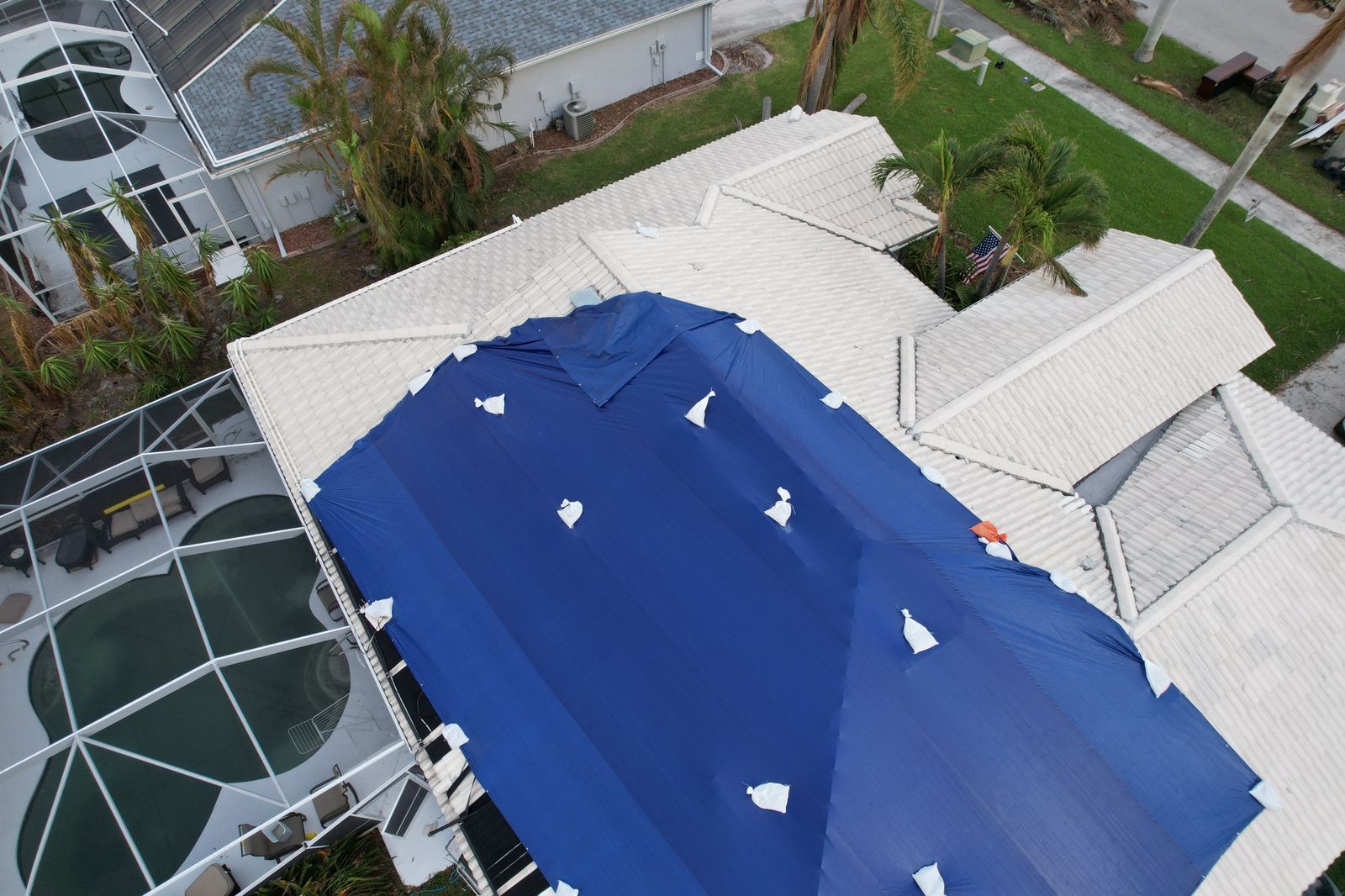
Most Florida homeowners only file a roof claim once or twice in their life. Insurance companies process thousands every week. That imbalance is exactly why damage so often gets missed, and it is exactly why clear documentation from an experienced contractor matters.
iDEAL Home Solutions documents and repairs storm-damaged roofs across Bradenton, Sarasota, Tampa, and the wider Suncoast every month. We are triple-licensed, family-run, and local, which means that if you want us there when your adjuster visits the property, we are there in person and not a call center three states away. This page explains how a Florida roof claim actually works, where damage gets missed, and how we document it so your insurer has an accurate record.
What Florida homeowners insurance covers on a roof
Most standard homeowners policies in Florida cover sudden, accidental damage from a covered peril. In roofing terms that usually means wind, hail, and storm-driven debris, along with the interior water damage that follows when the roof is breached. What is generally not covered is ordinary wear and tear, age, or a lack of maintenance, which is why timing and documentation matter so much.
The line between covered storm damage and excluded wear is where most disputes happen. A roof that was aging but functional before a storm, and then failed because of it, can be a valid claim, but only if the storm damage is properly documented. That is what our documentation provides: clear, dated photos and notes showing the storm damage we found. We inspect, we photograph, and we write it up the way an adjuster is trained to read it.
The claims process, step by step
There is no mystery to it once you have done it a few hundred times. Here is how the process usually goes, and where we fit into it, so nothing gets missed.
The claims process, walked with you
Five clear stages, and our role as your contractor in each one.
Free inspection
We climb the roof, find and photograph every point of damage, and tell you honestly what damage we found.
Document the damage
We build the evidence file an adjuster needs: dated photos, drone footage, and a clear scope of the damage.
Claim support
You file with your insurer; we supply the photos, report and repair estimate.
Adjuster visit
With your permission, we can be on site to walk the adjuster through the damage we documented.
Complete the work
Once your insurer settles the claim, we do the repair or replacement to code, then clean up and register your warranty.
ACV, RCV, and what your policy actually pays
Two terms decide how much money reaches your roof, and most homeowners have never heard them explained plainly. Actual cash value, or ACV, is what your damaged roof is worth today after depreciation for its age. Replacement cost value, or RCV, is what it costs to replace the roof new. The difference between them can be thousands of dollars.
Many Florida policies pay on a replacement cost basis, but in two parts. They release the depreciated amount first, then release the rest, the recoverable depreciation, once the work is actually completed and invoiced. Homeowners who skip the repair often never receive that second payment. We complete the work and provide an accurate final invoice and documentation for your insurer. If your policy only pays ACV, it is worth confirming that with your insurer up front so there are no surprises about what comes out of pocket.
Why damage gets missed in a claim
When damage is left out of a claim, it is rarely random. These are the most common documentation gaps, and every one of them is easier to prevent than to fix after the fact.
- Damage was documented poorly or from the ground, so the adjuster could dismiss it as cosmetic.
- The claim was written up as a repair when the real, code-compliant fix is a replacement.
- Storm damage was blamed on age or wear because nothing tied it clearly to a covered event.
- Matching, code upgrades, or hidden decking damage were left out of the original scope.
- Damage was never photographed or written up before the adjuster visit.
When we can clearly see damage that the adjuster missed, we provide additional documentation, such as photos, measurements and an updated repair scope, for your insurer to review.
Deductibles, financing, and what you actually pay
On a covered claim, your out-of-pocket cost is usually just your deductible. Florida policies often carry a separate, higher hurricane or windstorm deductible, so it is worth knowing which one applies to your storm before you assume a number. Your insurer can confirm which deductible applies to you.
Sometimes a claim does not cover everything, for example an upgrade you want or a deductible that lands at an awkward time. That is what financing is for. Financing is available through Service Finance Company, LLC, subject to credit approval. The application takes only a few minutes, and it can be paired with a claim to cover a deductible or an upgrade the policy does not fully pay. If your damage came from a recent storm, our storm restoration page covers the emergency response side of the same process.
When it makes sense to file, and when it does not
Not every roof problem should become a claim, and an honest contractor will tell you so. If the damage is small and clearly below your deductible, filing gains you nothing and puts a claim on your record for no benefit. If the roof is simply old and worn rather than storm-damaged, that is a maintenance issue most policies do not cover, and trying to force it through only wastes everyone's time.
Where a claim genuinely makes sense is real, documentable damage from a covered event that exceeds your deductible, especially a storm that left your roof compromised. That is exactly the situation we are built for. Our free inspection exists to answer this question honestly before you file. We tell you honestly what damage we found and whether it looks storm-related, and if it does not, we tell you that too. You never pay for that assessment, and you are never pushed toward a claim that is not in your interest.
The point is that you should go into the process informed. A claim is a tool, and like any tool it is right for some jobs and wrong for others. We help you use it when it fits and steer you away from it when it does not, which is how we keep the trust that our business depends on.
Why homeowners choose iDEAL after a storm
We are not public adjusters and we are not lawyers. We are the licensed contractor who documents the damage and does the work.
- On-site with your adjusterWith your permission, we can be on site when your adjuster inspects, to walk them through the damage we documented.
- Documentation that holds upDated photos, drone footage, and a written scope built the way adjusters are trained to read them.
- Licensed, insured, accountableThree active Florida licenses and full insurance. The company that documents your damage is the same one that stands behind the work.
- Final paperwork done rightIf the scope misses damage, we provide additional documentation, and we supply an accurate final invoice.
Roof claims across the Suncoast
Based in Bradenton and documenting roof insurance claims across Manatee County, Sarasota, Tampa Bay, and the Florida Panhandle.
Roof insurance claim questions, answered.
The questions Suncoast homeowners ask before filing a claim.
Our inspection and claim documentation are part of the roofing work we are hired to do. Your out-of-pocket cost on a covered claim is typically your insurance deductible, and your insurer decides coverage.
Rate and renewal decisions are up to your insurer, and we cannot promise how they will respond. What we can do is make sure that if you file, the damage is documented properly and accurately, so your insurer has a clear record to review.
Actual cash value is what your roof is worth today after depreciation for age. Replacement cost value is what it costs to replace new. Many Florida policies pay replacement cost in two parts, releasing the depreciated amount first and the rest once the work is completed and invoiced.
That decision is up to your insurer. If we can clearly document damage that was missed, we can provide additional documentation for your insurer to review. A free inspection shows you what damage is actually there.
It varies with your insurer and the season, but from filing to a finished roof is often one to three months. Storm season backlogs can stretch that. We provide our documentation promptly so it does not hold things up on your end.
On a replacement cost policy, the recoverable depreciation is only released once the work is actually completed and invoiced. Skipping the repair usually means leaving that second payment behind, and it leaves your roof unfixed. We complete the job and provide the final invoice and documentation your insurer asks for.
Not sure if you have a claim? Let us take a look.
A free inspection shows you honestly what damage is there. If you decide to file, we document the damage and provide the report and estimate your claim needs.